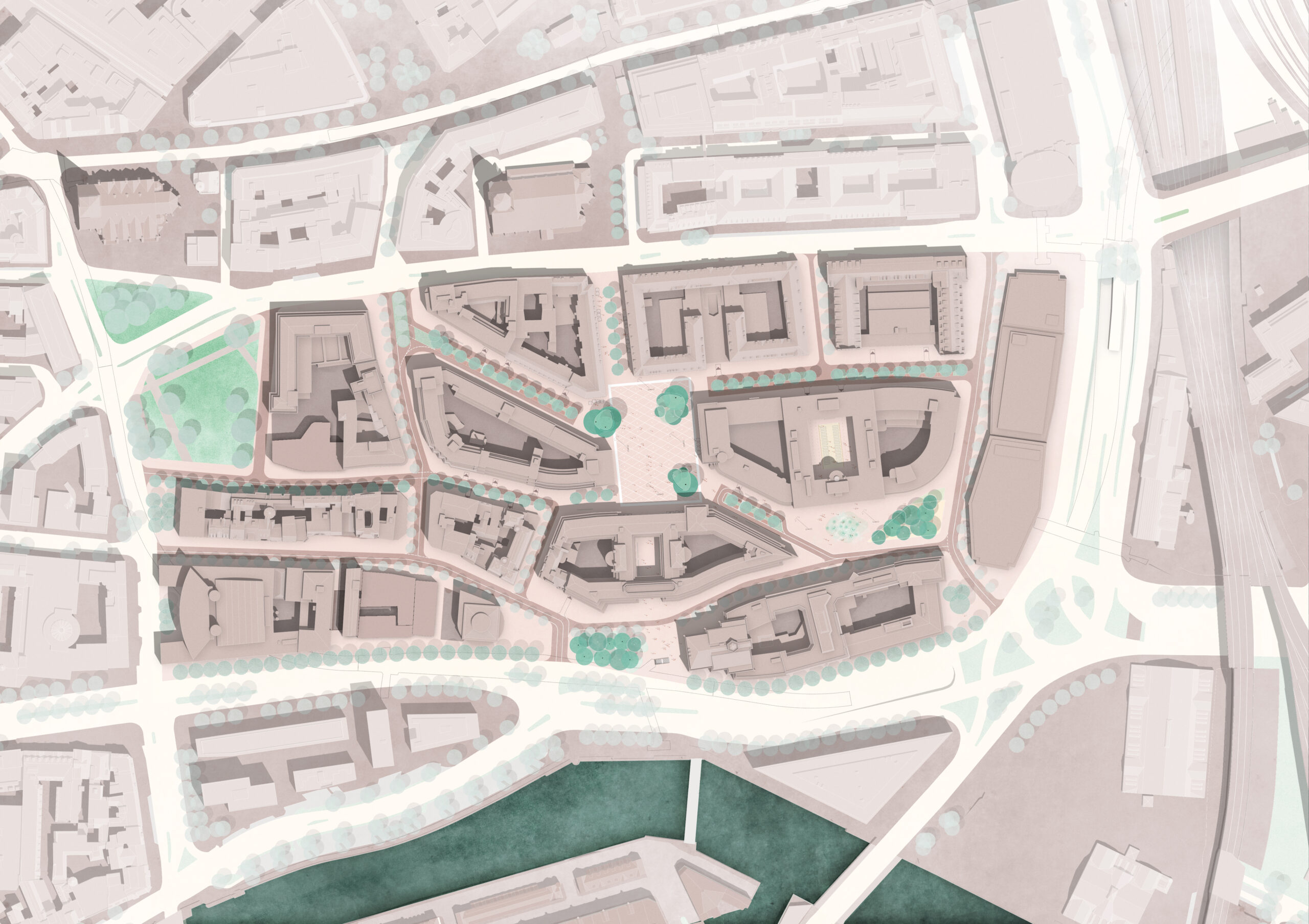
This project focuses on creating an atmosphere of lightness, in contrast to the strong material presence of the expressive brick architecture of Hamburg’s Kontorhausviertel. The historic façades of these buildings are among the most distinctive and defining elements of the city’s architectural history.
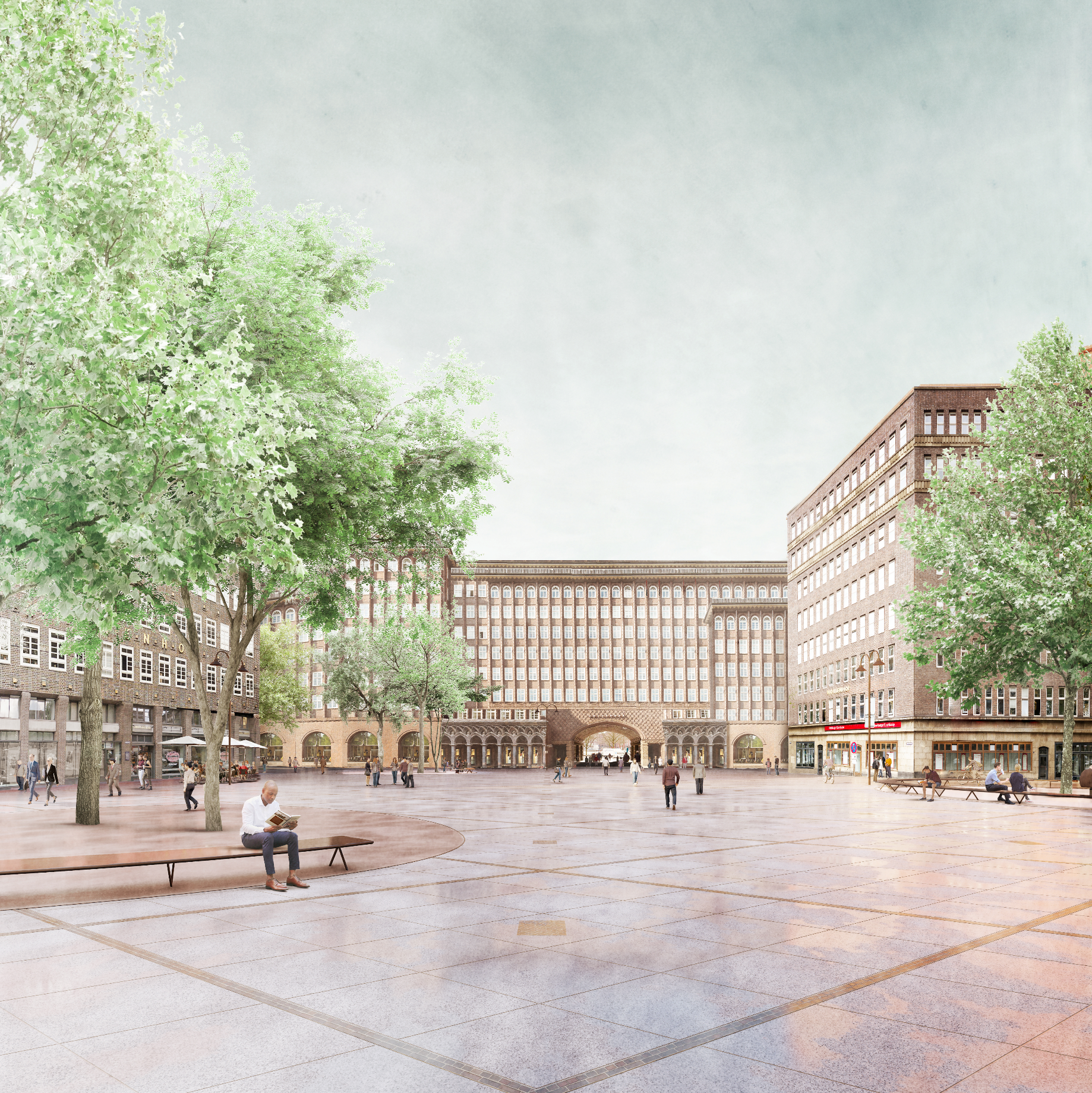
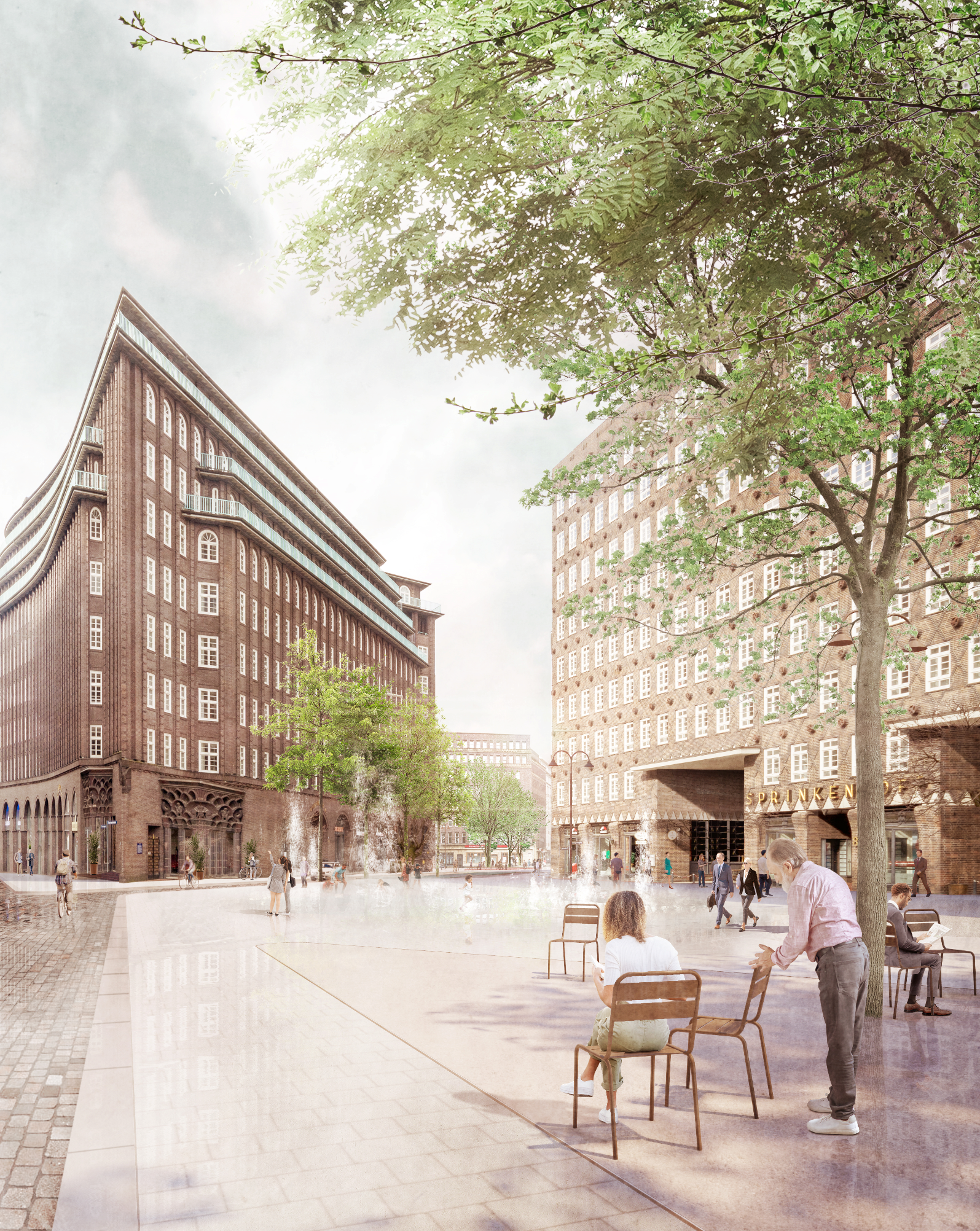
Burchardplatz forms the heart of the Kontorhausviertel, where all the streets of the district converge. Together with the Chilehaus and Sprinkenhof, it serves as one of the district’s defining public spaces.
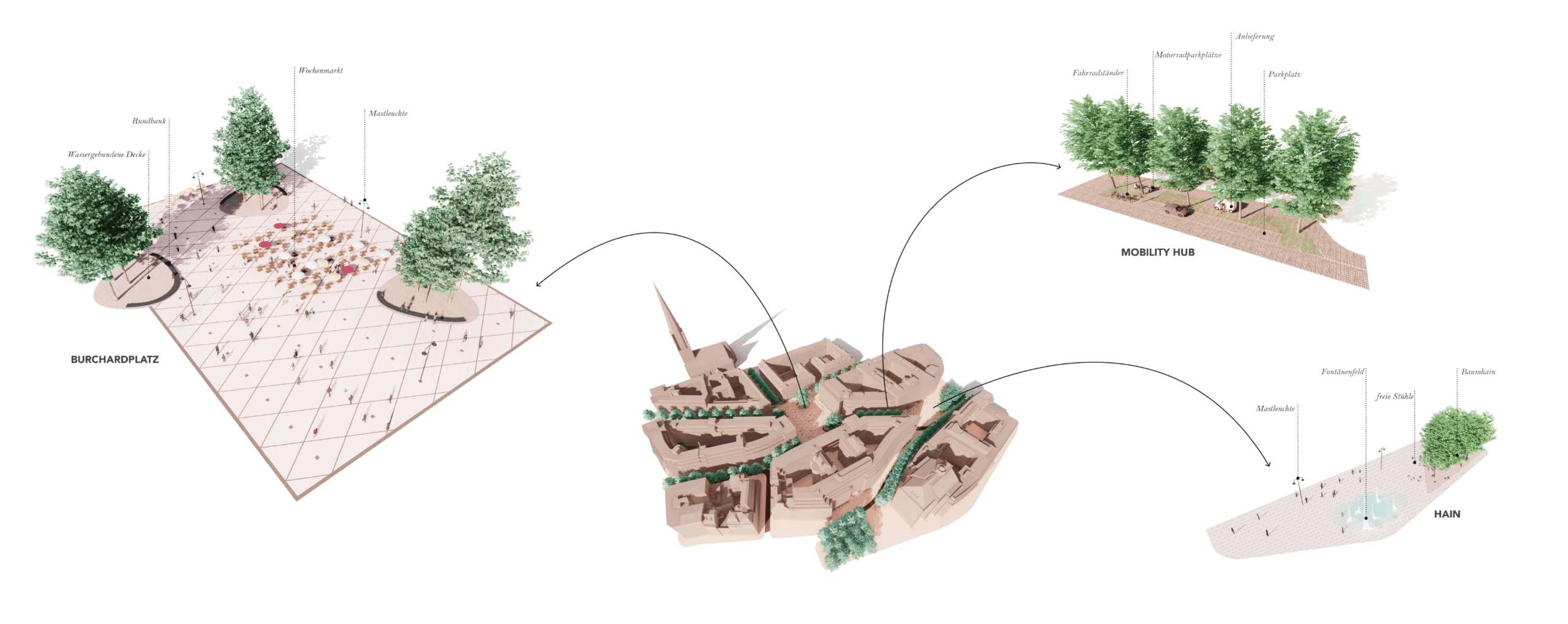
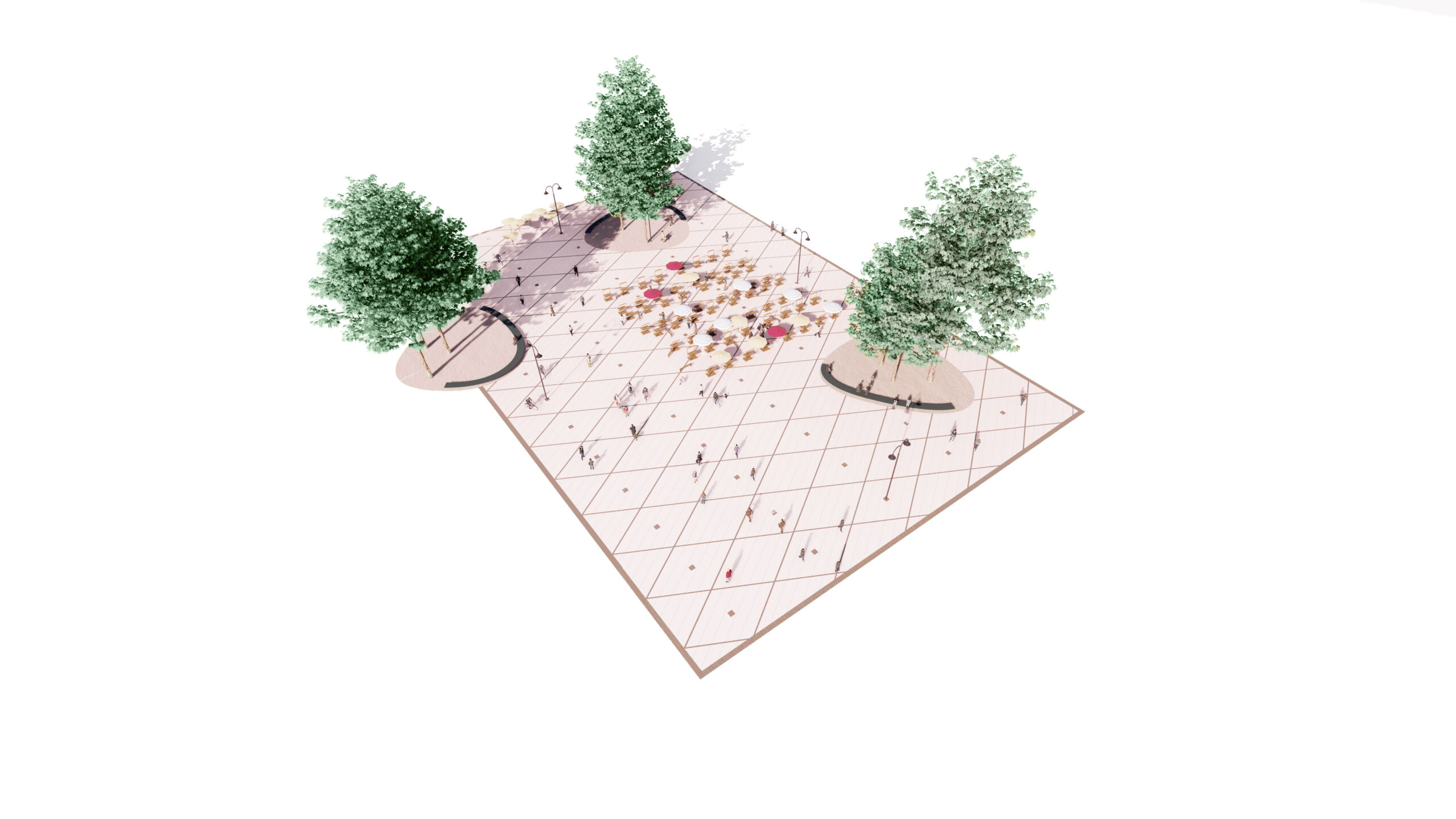
To allow the buildings surrounding the square, with their dark brick façades, to stand out, the square will contrast with the darker paving of the surrounding streets through a light surface in grey-beige tones, composed of large-format natural stone slabs. The square itself will remain largely free of street furniture, allowing maximum flexibility for different uses, such as the weekly market, Christmas market and other events.
The subtle diamond pattern across the square refers both to the architectural language of the 1950s and to the elegant façades of the buildings surrounding it. The aim is to transfer the subtlety of these façades into the public space, reinforcing the importance and value of Burchardplatz within the wider district. By simplifying and enlarging these patterns, the design deliberately avoids both competing with the architecture and directly reproducing details from the façades.
Instead, the intention is to reflect the aura and elegance of the office buildings within Burchardplatz while emphasising the square’s own distinct identity. Architecture and public space remain in constant dialogue, while differing not only in scale but also in meaning and character.
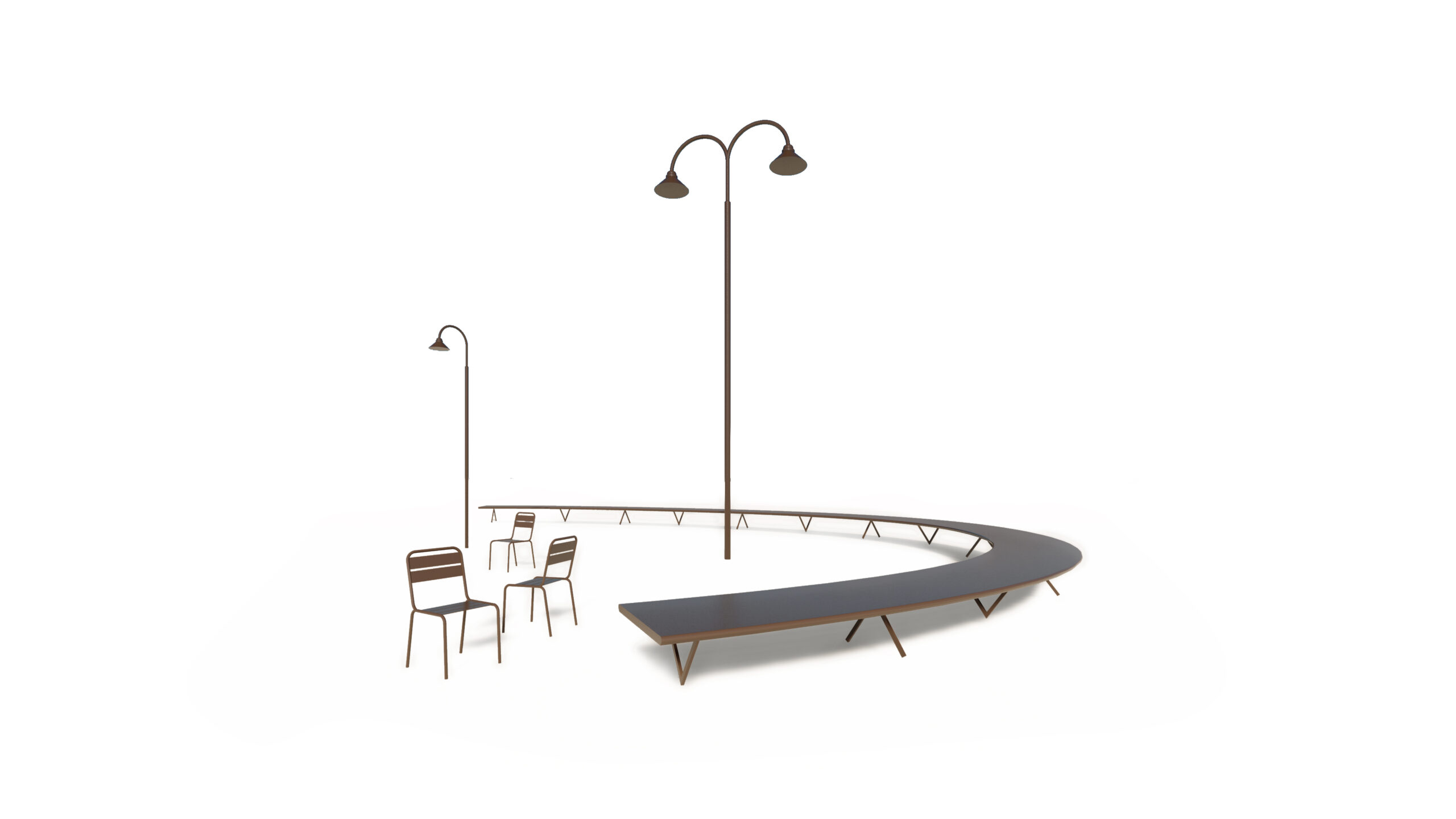
The benches are positioned to offer different perspectives from which to experience the architecture of the Kontorhausviertel. Integrated into the benches are the names of cities and countries across three continents with which the Kontorhausviertel maintained commercial ties during the period when it was a major centre of international port trade.